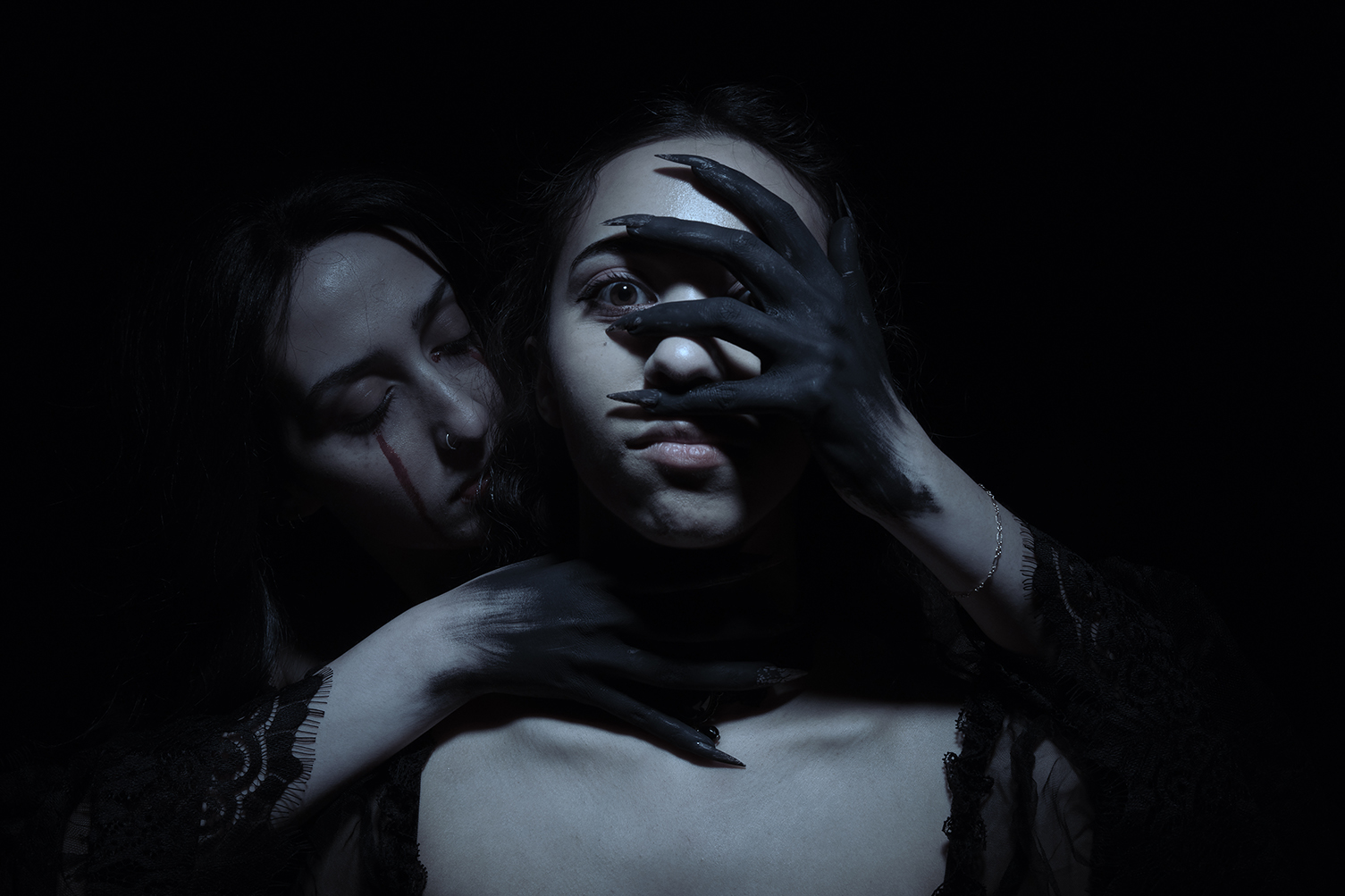
I’m always looking for ways to experiment and bring unique visual concepts to life. This Nosferatu-inspired shoot was a creative passion project — no client brief, just full artistic freedom. It was a chance to explore horror-inspired storytelling using dramatic lighting, fog, and emotion — all shot in my home studio.
If you’re looking for cinematic studio photography in Northern Virginia, this shoot is a perfect example of what can be created with careful planning, strong direction, and the right gear.
Concept & Inspiration
The shoot was inspired by the iconic 2024 horror film Nosferatu. I wanted to capture the eerie, theatrical feel of early horror cinema — shadow-heavy compositions, expressive emotion, and timeless costuming.
To help solidify the visual direction, I created a Pinterest moodboard that guided the wardrobe, posing, and lighting approach.
Gear & Lighting Setup
Here’s a full breakdown of the gear used in my Northern Virginia home studio:
- Camera: Canon R6
- Lens: 24–105mm f/4
- Lighting: Godox DP400III-V and Godox SK400II
- Modifiers: 30° gridded reflector, and optical spot for dramatic control
- Backdrop: Savage black seamless
- Atmosphere: Fog machine
- Fill: Large V-flat
This setup gave me full control over light direction, contrast, and texture — which is crucial for cinematic portraiture.
Working with the Models
I had the pleasure of working with @katsudamncosplay and @echoechostar on Instagram. Their performances were incredible — we discussed the emotional tone beforehand (fear, shock, terror, and hopelessness), and they fully embodied the characters.
Wardrobe choices were inspired by Victorian fashion, with minimal makeup to stay true to the film’s era.
Camera Settings & Lighting Philosophy
Here are my typical in-studio settings for this shoot:
- Shutter Speed: 1/200
- Aperture: f/7.1
- ISO: 400
But here’s an important note: in studio environments, settings are flexible. What truly matters is how you control your lighting. Light intensity, angle, and fill all play a greater role than your ISO, SS or aperture.
The most challenging part of this shoot was balancing the harsh key lights with soft fill. I used V-flats strategically to adjust fill brightness and added fog for atmosphere. I even let highlights run a little hotter than usual to increase the visual tension — something that works well in horror-themed photography. I’ve also attached some “amazing” diagrams to illustrate how my lights were setup.
I also want to note, that there was no diffusion used for any of these shots; so if you’re using diffusion you will notice the shadows won’t be nearly as harsh if that’s the effect you’re going for.

Use a snoot or a standard reflector with a grid to keep the light controlled, inverse square law applies here, so make sure to move the light a little closer if you want less light fall off. Move the v-flat closer or further away if you want more or less fill.


Similar set up as the previous configuration but I flipped the v-flats over for negative fill; I also incorporated an optical spot to create that shape of light over katsudamn’s torso. I recommend Westcott Optical Spot by Lindsay Adler.


This lighting setup is very simple, but very effective. This is a single light setup with a standard reflector paired with a 30 degree grid; and two negative fill v-flats on both sides you can experiment with the grid and light distance to achieve your desired effect.


Post-Processing & Color Grading
I used Lightroom for general lighting adjustments and Photoshop for detailed skin retouching and color grading.
For color grading, I extracted color palettes directly from stills of Nosferatu using Photoshop’s “Save for Web (Legacy)” feature. By limiting the colors on export, you can create a simplified color palette. These tones were then applied using Gradient Maps in Photoshop — one palette for cold tones, and another for warmth.
You can download the swatches here: Warm | Cold
This gave the final images a cinematic, cohesive look that paid homage to the 2024 film.
Final Delivery & Reaction
Images were delivered digitally to the models, who shared them on social media. The feedback was incredibly positive — many people appreciated the stylized look and classic horror influence.
Some of my favorite images from the set were those where the fog caught the spotlight just right, creating layers of depth and a true cinematic feel.


